Category: Time

  • The Ultimate Definition of Time

    The Ultimate Definition of Time

    The Ultimate Definition of Time 

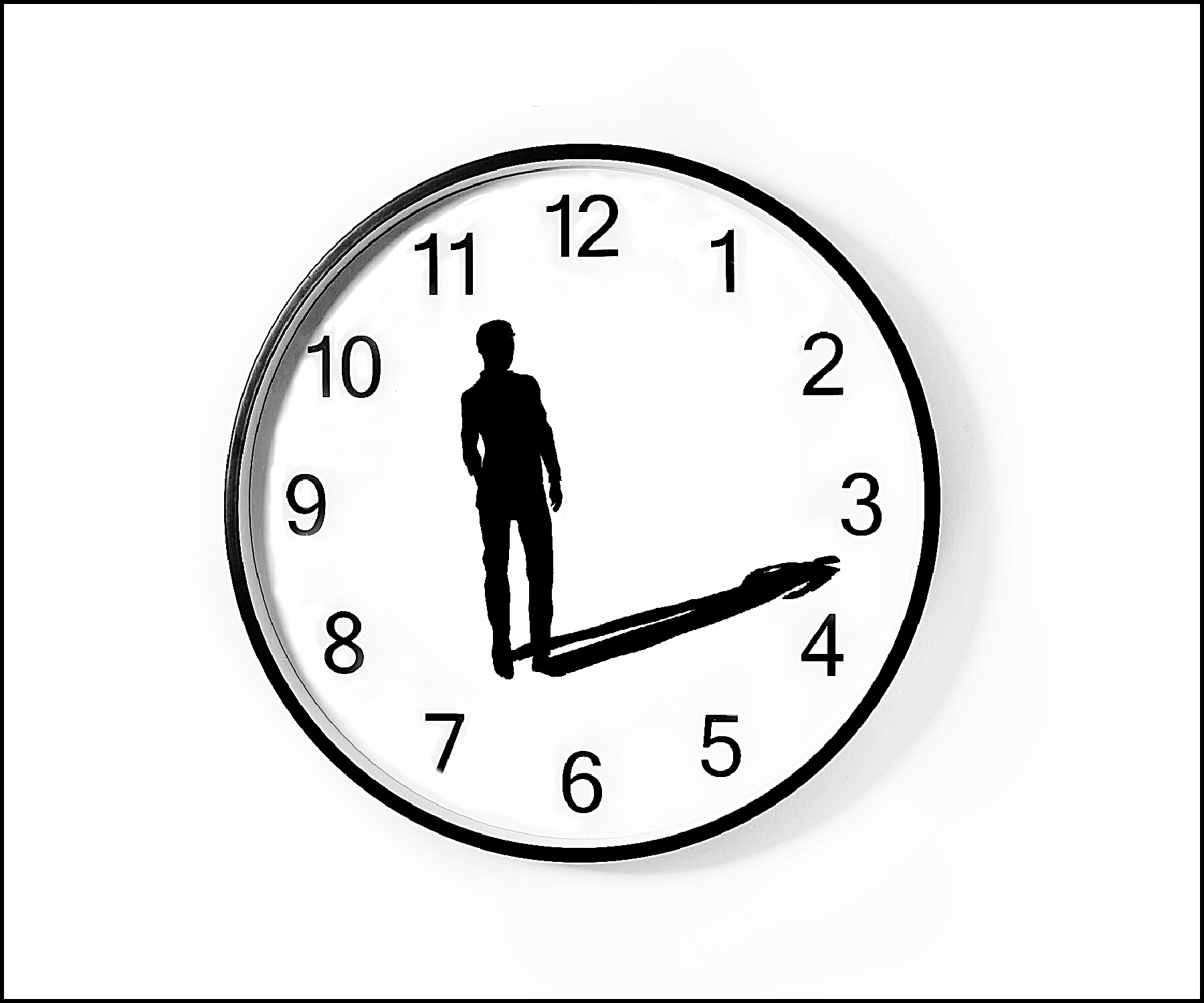
    Motion is measured with a clock. Therefore, time is the measurement of motion. Time and motion move together, and time is what a clock shows. 
    The planets orbit the Sun, our star. The motion of each planet is different, and we can measure how fast they move relative to our motion on Earth. 

    Where there is motion, there is time because time is how we measure motion. 

    When you drive your vehicle at 100 km/hr, the motor supplies the power, and you regulate it with your foot on the accelerator pedal. 

    The speedometer shows you how fast you are moving. You can travel 100 kilometers in one hour on planet Earth at that speed. 

    Time And Tide Wait For No One

    Time is the measurement of motion, but the motion of things doesn’t depend on time. 

    Time isn’t something that waits or moves. The Earth moves, and tides move. 

    Time is the measurement of the motion of Earth and its tides. Time happens because motion happens, but time is just the measurement of how fast motion happens. 

    But not just any motion. 

    The universe is full of motion, and the motion of our planet is what we call time. 

    In the beginning, time was the length of one day. With the invention of clocks, the time of one day was made into 24 hours, each hour into 60 minutes, and each minute into 60 seconds. 

    At first, the hour was divided into 60 minutes, and after the second division of a minute, it was called a second. The second became the smallest unit of time, so a day has 86,400 seconds. Strange but true.

    The second is one unit of time or 1/86,400th of a day. 

    Science has measured the duration of one second by using the oscillations of a cesium-133 atom. 

    The second is defined as being equal to the time duration of 9,192,631,770 periods of the radiation corresponding to the transition between the two hyperfine levels of the fundamental unperturbed ground-state of the cesium-133 atom. That’s a mouth full, eh?

    The confusion we have is that a clock’s ticking moves, and timekeeping moves, so we think that time moves; instead, it’s the Earth that moves. 

    A clock is an invention that ticks at the same rate as the Earth moves, and the display on the clock is called time. 

    The Speed of Motion

    If we don’t differentiate between time and the time (display) on a clock, we will have errors in the mathematics of science. 

    Time in scientific events and durations must be accurate to give reliable results. What is the definition of a clock and time? 

    Time is an abstract thing that doesn’t exist outside of now. 

    Time is a measurement using a clock that works using numbers. 

    You don’t live in time or move in time. Time and time dilation are misunderstood concepts. 

    Time is a man-made motion measuring system based on the motion of earth using units of seconds. 

    Most people make the error of thinking that time is the same as motion. Let me explain. 

    Time is what a clock shows, and motion is the moving second hand on a clock. The second hand of a clock moves at the same rate as the Earth. 

    Time is what a clock shows when you look at the display. 

    The Motion of Atoms and Time

    The unit of time is the second, and the measurement of its length is measured more and more accurately. 

    The way I see it, they measure a second with a better second. 

    Namely, that time is measured with time, or more accurately, motion is measured by counting motion and calling it time.

    Time isn’t real because it’s defined by the motion of an atom. The motion is real, and time is the measurement of the motion. 

    A clock is said to measure time because Einstein said, “Time is what a clock measures.” But he was wrong; my reply is, “Time is what a clock shows.”

    Timekeeping tools became accurate with pendulum clocks, then quartz clocks, followed by the cesium clock, and now a quantum clock. 

    Every clock measures motion, not time, and then displays it as time. Time is what a clock shows. 

    Time doesn’t go backward or stop. A clock keeps on ticking unless it runs out of power or gravity stops it. 

    Clocks use Motion to Measure the Length of a Second

    Since 1968, the International System of Units (SI) has defined the second as the duration of 9,192,631,770 cycles of the cesium-133 atom. 

    They say that it will keep time to within one second over 100 million years. But some newer atomic clocks can do much better.

    The quantum strontium clock, from the National Institute of Standards and Technology and the University of Colorado Boulder, measures the movement of strontium atoms. 

    All atoms have a consistent vibrational frequency (for strontium, it’s about 430 trillion times per second).

    The measurement of these movements is used to create the clock’s “tick.” 

    This clock is accurate to one second in 15 billion years.  Such a clock can measure a change in its elevation of as little as 2 cm due to gravitational time dilation.

    You might wonder why a clock needs to be so accurate to motion? 

    There are two important facts about matter. Atoms vibrate or have a frequency, and time is relative to gravity. These two things are necessary for the proof of my theories. 

    The energy in atoms vibrates, and the measurement of that motion is what we call time.

    Energy in the quantum vibrations of atoms (QCD) converts motion into quantum gravity. 

    Thus, a force of gravity can change the vibrations of matter and change time because time is a measurement of the vibrations (motion).

    Can Motion Move Faster than the Speed of Light?

    The speed of light is the fastest in the universe. Is it possible for any motion to move faster than light? 

    Photons are the quanta of light, and they come out of electrons at the speed of light.

    When scientists look inside atoms, they see an amazing movement of energy. The electrons must be moving at the speed of light since they release photons at light speed. 

    Normally, only photons can move at the speed of light, but quarks and gluons inside atoms are also moving at light speed.

    When an object moves, you can calculate that the electrons are moving faster than the speed of light relative to a stationary object.

    Another way to look at motion is to consider that electrons are moving at light speed. 

    If an object moves at 99% of light speed away from another object moving at 99% light speed, then the speed of electrons relative to a frame of reference moves almost twice the speed of light. 

    In the same way, if two galaxies are moving away from each other, they are speeding away faster than the speed of light. 

    Thus motion can move faster than light in certain frames of reference. 

    Are you thinking about time now, lol? Thank you for following my blog and website at https://lovinthings.com/.

    As always, be well, and stay safe.

    Erik at eriklovin@gmail.com

    Join our Newsletter

  • GPS Vs. Spacetime

    GPS Vs. Spacetime

    GPS Vs. Spacetime

      GPS and Spacetime must use the accurate time to know a location on Earth or in space. Einstein said time is relative, but what does that mean to you, and why should you care?

    The GPS is a Global Positioning System owned and operated by the US Space Force and provides position, navigation, and time to everyone in the world with a GPS receiver. Most phones and newer cars have a GPS receiver.  Is GPS also used in Spacetime?

    The GPS Network

    The network of GPS has three segments that control the operation. 

    1. The Space Segment consists of at least 24 satellites that transmit one-way signals of the satellite’s position and time.

    2. The Control Segment consists of worldwide control stations that maintain the satellite’s orbits and adjust the accuracy of the clocks.

    3. The User Segment consists of the GPS receiver that converts the signal into the receiver’s position and time. 

    The GPS answers five questions simultaneously:

    “Where am I?”

    “Where am I going?”

    “Where is the destination?”

    “What’s the best way to get there?

    “When will I get there?” 

    The Operating Facts

    Your receiver must have a line of sight to at least four satellites, so mountains and buildings can block some or all signals.

    A GPS receiver calculates its position and time based on data received from 4 to 6 satellites. 

    Your receiver doesn’t transmit data to the satellites, and it operates minimally even without Wifi or internet reception.

    That’s great to know. Even if you don’t have Wifi, the GPS will show where you are. You are not lost unless your receiver (phone) runs out of power. Relax, just follow the map to get back to Wifi territory.

    The satellites carry very stable atomic clocks that are synchronized with one another and with ground clocks. 

    Any drift from the time, such as time dilation, is corrected daily. In the same manner, the satellite locations are known with great precision.

    The speed of radio waves is constant and independent of the satellite speed. Thus the time delay between the satellite’s signal to the receiver depends on your distance from the satellite. 

    The receiver must see at least four satellites to compute the four unknown quantities. Three coordinates of the location and one of time. 

    The (3) coordinates of your location are the longitude, latitude, and height as measured from the satellites. Imagine, each satellite is 20,000 kilometers above the surface of the Earth, and they map and record every square meter of Earth’s surface.

    What Three Words

    What 3 Words (W3W), is a new and unique way of knowing your location. Instead of knowing your longitude and latitude, you can use 3 words to know your location. 

    The free app has converted each 3×3 meter area (about 100 sq.ft.) into (3) words. For instance, my address is wing.necks.dove. 

    You can call 911 emergency and give them the three words, and they will know your location. Each country has a different language, but I think they can give the location in any language.

     Timekeeping Accuracy

    Most receivers (phones) are accurate within 100 nanoseconds to the GPS time, but currently, GPS time is faster than the International Atomic time. Should you care? 

    Have you ever driven with your GPS, and you notice that you are off by more than 30 feet from the destination? If the time isn’t accurate, the location isn’t accurate. 

    That’s why it matters to you, that they must keep the accurate time. What about Spacetime? 

    Your Spacetime

    The GPS system gives you your location and your present moment. When you move, your space-time gives you your speed or motion. 

    If you are driving, your speedometer shows how fast you are moving. But if another observer wants to know your speed, they must measure your distance traveled per time. 

    A police radar gun can calculate your speed from your distance traveled divided by time and answer it as km/hour, just like your speedometer. 

    The GPS satellites can also measure the speed of boats, trains, and airplanes. 

    The satellites can see your vehicle from space and calculate the distance you move per second, and convert it into km/hour. 

    To calculate your speed from space isn’t very accurate. For one, it doesn’t see the terrain or territory accurately, and the GPS time isn’t 100% accurate with Earth-time due to time dilation.

    Spacetime of Relativity

    Measurements in space are difficult to measure because space doesn’t have size and distances.

    On Earth, the GPS system monitors your location, speed, and time regarding where you are, and it’s easy to calculate your motion per time and estimate your speed. 

    When we try to calculate speed in space, it becomes much more difficult. We can’t see a location in space because space doesn’t have a size or a way to measure distance. 

    To know how fast objects in Spacetime are moving, we need a comparison of distance. Also, our standard of Earth-time isn’t compatible with time dilation in space.

    The only way to estimate a speed is by using the background location of stars that are seemingly at infinite distances and are relatively motionless to us. 

    When measurements are made this way, the speed isn’t in km/hr as on Earth. The units have changed to Space and time into time dilation, known as Spacetime.

    Spacetime is a geometric fabrication that exists on paper as a map, but it can’t give you a description of the territory that doesn’t exist. 

    Spacetime is a metric, a sequence of numbers, but it’s not a fabric such as the rubber sheet they use in the demonstration of gravity. 

    With GPS, they measure distance divided by time to get the speed. With Spacetime, distance becomes space that can’t be measured, and time isn’t local time.

    Thank god we don’t have to worry about Spacetime or the fake rubber fabric of Space, lol, but OMG, it’s awesome to have GPS and W3W to make life easier. 

    Remember the times you used to argue about directions? Now you can forget about reading maps and just concentrate on your safe driving. 

    Key Takeaways:

    1. GPS is a free public service to everyone.

    2. You don’t need wifi to use GPS.

    3. Accurate locations need the accuracy of timekeeping.

    4. Spacetime is a geometric map to visualize the effect of gravity.

    5. What 3 Words is a free app that converts your location into 3 words.

    Thank you for your time and support. Join my blog at https://lovinthings.com/