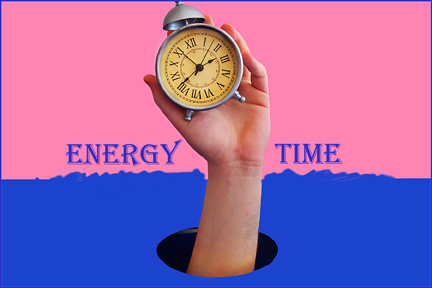
The Motion of Time
Long before clocks existed, people knew the time by watching the Sun move across the sky. In modern times, any repetition of motion can be converted into a clock.
The sound of music has rhythm, and musicians are familiar with a metronome. The metronome produces audible tones that help set the music’s beat. If a metronome ticks once each second, the ticking is the same as a clock, and if you count the ticks, it’s an audible clock.
What just happened? A constant beat was converted into a timekeeping tool, just like a swinging pendulum became a clock. Do all clocks rely on some kind of motion that we convert into time? What are clocks really measuring?
You can hear rhythm in music, but you also feel rhythm inside your body. Your heartbeat has a steady beat, almost like a natural metronome. If your heart beats sixty times per minute, it behaves like a biological clock. You can hear and feel your heart ticking like a metronome.
We have learned to measure time through our experiences. How many steps does it take to walk to the bus stop? I’m hungry. How much longer until it’s lunchtime?
If a clock measures time rather than motion, does that mean time moves the Earth? Let’s make a distinction about time: motion isn’t time, but we can measure motion. In physics, motion is described by how an object changes position. Speed is measured as distance divided by time. For instance, your car’s speed is measured in miles per hour.
Does a time interval equal a motion interval? If a clock measures motion, is time a measurement of motion, or is time itself the cause? Atomic clocks count the number of oscillations a cesium 133 atom makes per second, but the duration of a second is historically derived from the rate of Earth’s rotation. Is it confusing?
If a clock measures motion, why do we call it time? That’s a great question. Time is synonymous with clocks, right? How do we measure time? Time is like a map, not the territory.
Time consists of three parts: the physical part is the motion of objects and atoms. Then a clock counts the motion into units of time at one-second intervals, and finally, we translate the numbers on a clock into the language of time. Hey, it’s eleven thirty, let’s go to the restaurant at noon.
The issue with the process is that clocks are designed to count a fixed duration, and then we measure the motion of atoms, crystals, or mechanical gears using the fixed one-second intervals. Namely, it’s a circular method, since clocks are calibrated with a fixed interval that divides a day into 86,400 seconds…
Atomic clocks count the number of oscillations of the cesium atom per second to measure the motion of other things. So the measurement of everything is based on the duration of a second.
Doesn’t that mean that clocks are accurate only on Earth? Why is that? Because clocks count a fixed duration based on Earth’s gravity, standard temperature, and pressure. What happens if clocks are in a different environment?
Do clocks behave the same way in every environment? For example, GPS clocks are calibrated to the Earth’s standard temperature and pressure. What happens when a clock is placed in space instead of on Earth?
When we want to know the duration of an event, we sometimes skip descriptions and take shortcuts with time… For example, what is a light year? It seems like a measure of a year, but it’s the distance light travels in one year. Moreover, summer is my favorite time of the year, and time waits for no one; however, wait a second…
When an object moves, and we measure its motion, are we measuring duration, speed, or time? It depends… A clock just counts seconds as things move. We eat, sleep, work, and play, depending on the clock’s time. Maybe clocks control us because we believe that numbers and time are physical things? No… how can a machine tell us to keep track of our daily appointments and activities?
How Does a Clock Convert Motion into Time?
Time and numbers are abstract things. You can see numbers, but you can’t see time. For example, you don’t see the Earth rotating; you see the sun moving across the sky. We often speak as if time causes motion, but could it be the other way around? Could motion be what allows us to define time?
Clocks count the motion of their mechanisms to define a second, a day, and a year. Then, we use calendars to organize the days into months and years.
Timekeeping uses these measurements: the year, day, and time of an event; its duration; and its speed. For instance, the 100-meter race is an Olympic event. The race takes place next Friday at 9 pm, and it takes about 10 seconds to run 100 meters, so their average speed is 10 m/sec.
Clocks Measure the Beat of Time
To better understand time, think of it this way: we feel gravity and motion. We have measured the force attracting us to Earth and called it gravity. We have measured the motion of the Earth and called it time. The main thing to realize is that motion is real, and time and gravity are measurements.
In science, motion is often described using clocks. By counting seconds, we can measure how fast things move and how long events last. As you look at a clock’s display, you translate numbers into language. A transformation occurs when time is perceived. The numbers become words. The words mentally communicate with your mind, forming bonds that often become expressions unrelated to time.
You have a personal connection with time. When you wake up in the morning, you glance at a clock. At first, you only see numbers on a display: 7:30. But something interesting happens in your mind. The numbers instantly transform into the language of time. “It’s seven-thirty.” “I should get up.” “Work starts at eight.” In that moment, the numbers become meaningful.
Every clock counts some kind of repeating motion: the swing of a pendulum, the vibration of quartz, or the oscillation of atoms. So if clocks are counting motion, then a deeper question remains. What exactly are we calling time? Visit https://lovinThings.com/