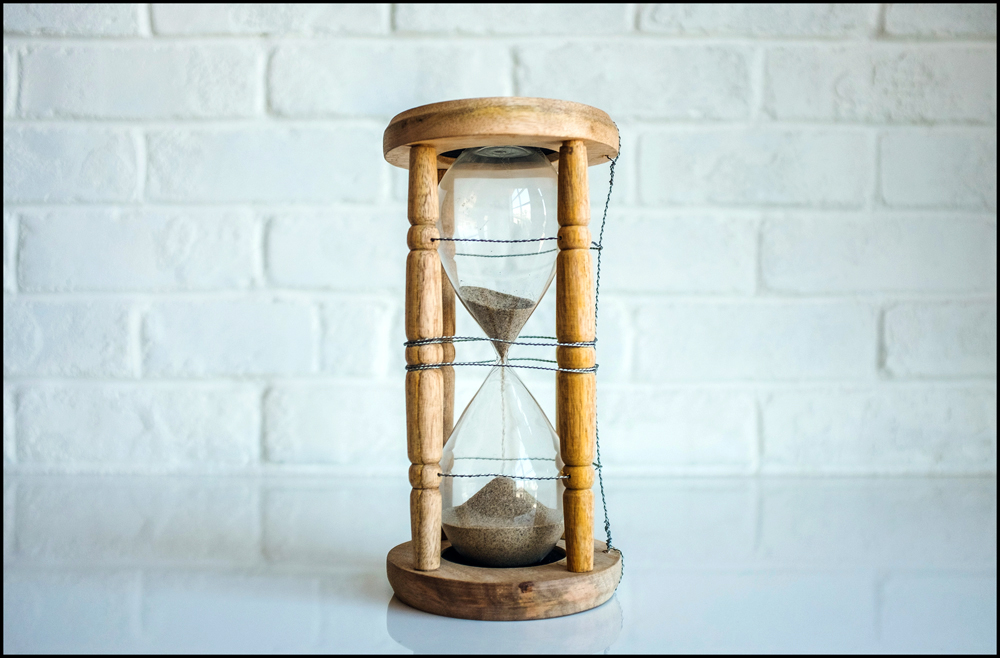
Your Relationship with Time
When we are young, we rarely think about time. As we grow older, something changes, and we begin to feel it.
Time becomes our most valuable asset, not because we can hold it… But because we finally know that it’s limited.
It quietly surrounds every moment of our lives, yet slips away without ever being seen. And whether you realize it or not, you have a relationship with time.
But this relationship is not measured by clocks. It is felt…
We don’t experience time as numbers; we experience it through emotion, attention, and awareness. In moments of fear, time seems to stretch. In moments of joy, it disappears.
Your body responds to the world, and your mind translates that response into feelings of time.
A racing heart in a moment of danger can make seconds feel painfully long. A calm, steady breath can make hours drift by in minutes.
Your heartbeat becomes like a living clock, not changing time itself, but shaping how you experience it.
Imagine riding a roller coaster with a friend. You laugh, energized by the thrill, while your friend sits frozen in fear.
Same ride. Same duration. Two completely different experiences of time. So what, then, is time?
We measure our lives with calendars. We count years, birthdays, and milestones. Yet inside, something feels unchanged, as if a part of us exists outside of time altogether.
Your body ages. But the sense of “you” often stays the same.
This creates a quiet tension between measured time and experienced time.
In moments of danger, like an accident, your mind records an extreme level of detail. Later, it feels as though the event unfolded in slow motion.
But did time actually slow down? Or did your awareness simply expand?
We often say time “flies” when we’re engaged and “drags” when we’re waiting. A joyful afternoon can vanish in an instant, and a few minutes of a toothache can feel endless.
Even memory reshapes time. A week filled with new experiences feels rich and long when you remember it. And a week of routine seems to disappear almost entirely.
So the question naturally arises: Why does time feel so flexible, so dependent on our state of mind?
Is time changing… or is something else creating this illusion?
To answer that, we must move beyond feeling and into measurement. Beyond experience, and into science.
Because the story of time doesn’t end with how we perceive it. It begins there…